A passive solar desalination project targeting post-conflict and low-income regions
Jinseok Ahn ยท ์์ง์
Hi! I'm Jinseok Ahn (์์ง์), a high school student with a deep passion for environmental protection and water conservation.
After realizing that water scarcity directly threatens the lives of millions โ especially in post-conflict and marginalized regions โ I decided to go beyond awareness and build a real solution myself.
My focus is on developing a passive solar desalination device that works without electricity or large infrastructure, making clean water accessible to anyone, anywhere.
"To design a cost-effective, energy-free desalination system that empowers individuals and communities โ especially in post-conflict and low-income regions โ to access clean, safe drinking water."
My interest began in an environmental science class, where I first learned about the devastating scale of global water scarcity. But the more I researched, the more I realized this wasn't just an environmental issue โ it was a matter of survival for hundreds of millions of people.
Seeing news coverage of children in post-conflict regions drinking contaminated water pushed me to ask: "If the technology exists, why can't we solve this?"
In war-torn and conflict-affected regions, infrastructure collapses. People are left without energy, money, or clean water. I wanted to build something for those people โ something that works with nothing but sunlight.
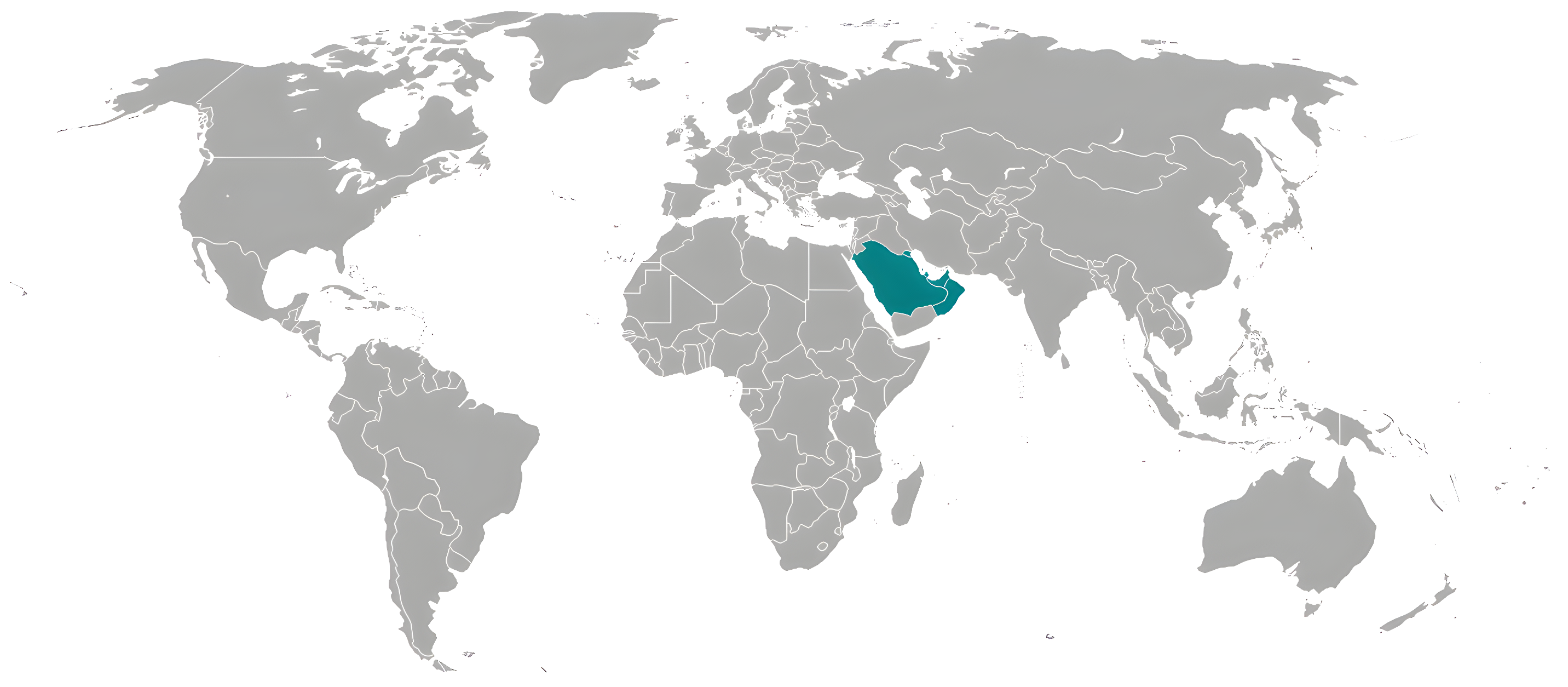
GCC Countries โ Primary target region for this research
๐ Most Water-Stressed Countries (WRI 2023)
99% of freshwater from desalination. World's #1 water-stressed country.
No rivers. Water demand nearly doubled between 2006โ2013.
Poor agricultural policy eliminated 2/3 of groundwater reserves.
Tigris & Euphrates rivers predicted to run dry by 2040.
18% of world population, only 4% of global freshwater.
UN warns of imminent absolute water scarcity.
Up to 6% GDP loss by 2050.
2024 Mekong saltwater intrusion affected 65M people.
As technological advancements inevitably cause more environmental issues, the preservation of clean water has become exceptionally harder than ever before.
Rising sea levels cause salination of freshwater sources such as underground water and ponds.
Existing desalination systems consume enormous energy, increasing fossil fuel use and worsening global warming.
Low-income countries and post-conflict regions face "economic water scarcity."
Large-scale desalination plants require government-level investment, inaccessible for individuals.
The main objective of this project is to create a more cost and energy efficient desalination system using 100% passive solar energy, specifically focused on post-conflict regions such as the Gulf region.
Directly addressing Target 6.1 โ achieving universal and equitable access to safe and affordable drinking water for all.
Supporting adaptive capacity in climate-vulnerable nations by providing a grid-independent solution that utilizes 100% passive solar energy.

No artificial energy input required: Reduces fossil fuel use. People without access to energy can have a reliable source of water.
Small size โ no cost for implementation: Can be used by individuals. Adequate for people suffering from economic water scarcity.
Cheap and accessible: Designed specifically for communities that cannot afford large-scale infrastructure.
Began research to identify the current problem, structural design, and materials to use for developing a prototype.
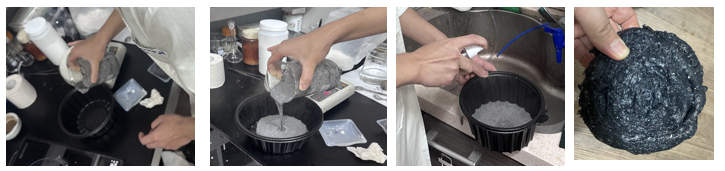
Developed the first prototype using Diamite, SiOโ, Gluconobacter, Bacterial Cellulose, Biochar, FeโOโ, and Agar.

Evaluated performance, limitations, and environmental and economic feasibility. Research paper published.
Developed an improved second prototype overcoming the limitations identified in the first.

Hydrophilic, low density, high porosity materials. Biochar maximized heat absorption. FeโOโ removes heavy metals with high photothermal conversion efficiency.
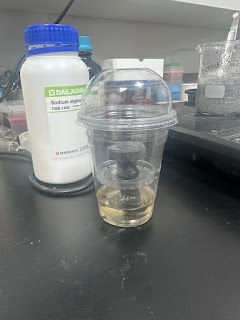
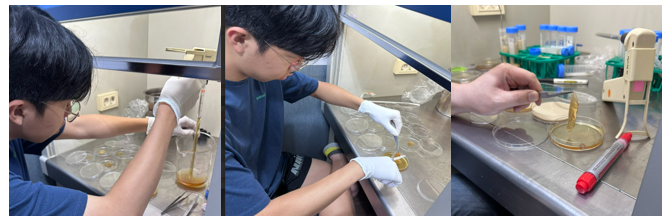
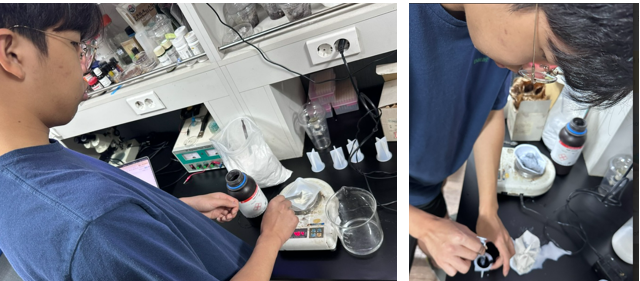
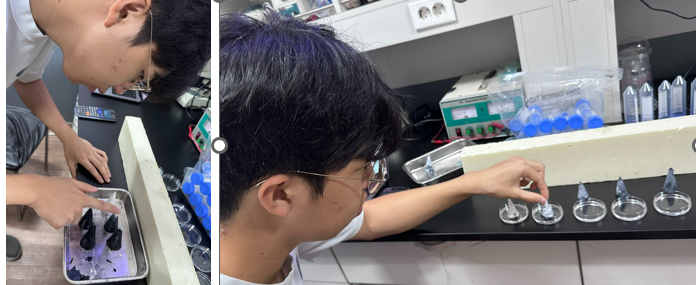
๐ฌ Lab Process


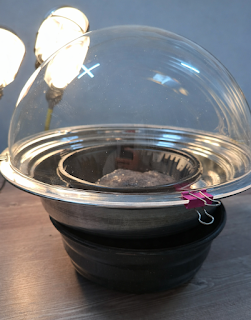
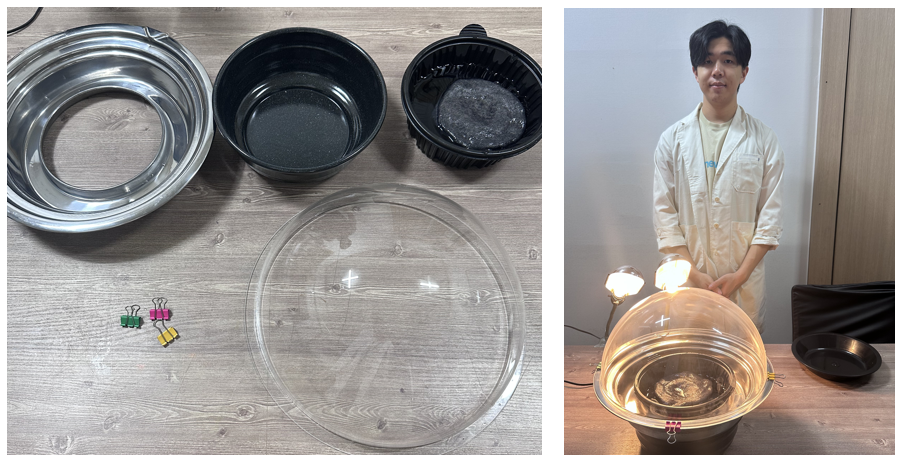
๐งช Prototype Structures


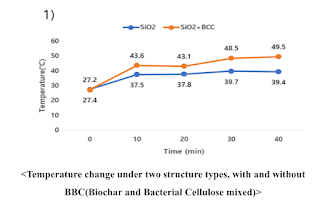
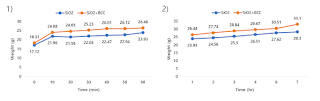
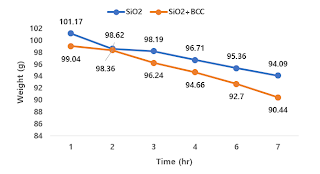
๐ Experimental Results


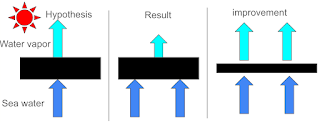
The structure retained a significant amount of water, indicating the rate of evaporation was slower than absorption. The surface did not heat efficiently because faster absorption provided cooler water, further reducing the evaporation rate.
Major changes in materials and physical structure to overcome Prototype 1 limitations.
The second prototype floats on water, increasing contact surface area and absorption rate.
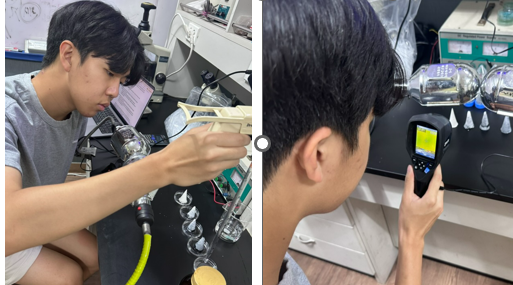
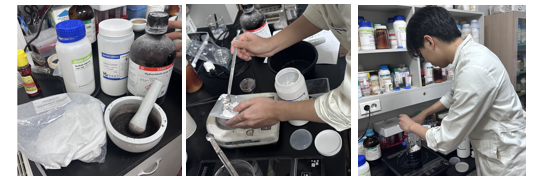
๐ฌ Lab Process


To increase the practicality and efficiency of water collection.
Agar retained water, preventing efficient evaporation. Sodium alginate has lower water retention, improving evaporation rate.
To increase the rate of water absorption.
Increases surface area in contact with water, subsequently increasing absorption rate.
Interested in environmental research, water scarcity, or sustainable technology? Want to learn more about my project? Feel free to reach out!
๐ฌ Reach out via email or social media.
Contact details coming soon.